- HOME
- Departments & Centers
- Neurosurgery
Neurosurgery
Message from the representative
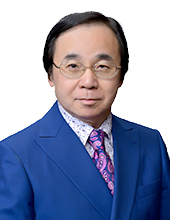
Physician-in-chief, Neurosurgery Department Senior Professor, IUHW School of Medicine, Neurosurgery
MATSUNO Akira, M.D. Ph.D.
I assumed the position of Senior Professor in April 2021. To date, I have been involved in endoscopic transnasal surgery for hypothalamic-pituitary tumors, surgery and chemoradiation therapy for malignant brain tumors, surgery for benign brain tumors such as meningiomas and acoustic neuromas, surgery and endovascular treatment for cerebrovascular disorders, surgery and intensive care for head trauma, and the pathophysiology and treatment of headaches. I strive to accurately assess each patient’s condition and provide the most appropriate treatment.
Our department treats a wide range of conditions affecting the brain, spinal cord, and peripheral nervous system, including cerebrovascular disorders, brain tumors, pituitary tumors, head trauma, epilepsy, functional disorders(such as pain and involuntary movements), pediatric brain disorders, spinal and spinal cord disorders, and peripheral nerve disorders. We have also introduced the latest medical equipment and are fully prepared to provide cutting-edge medical care.
Furthermore, through our collaboration with hospitals nationwide-including those in Chiba, Tokyo, Kanagawa, Saitama, Ibaraki, Shizuoka, Okinawa, and Hokkaido-we are able to contribute to regional healthcare while also maintaining a system capable of accepting patients from all over the country.
We are also dedicated to international medical exchange, engaging in academic collaboration with countries such as China, Taiwan, South Korea, the Philippines, Indonesia, India, Uzbekistan, Russia, and France. We have established systems to accommodate international students and treat international patients.
We are committed to ensuring the health and well-being of patients both in Japan and abroad. We look forward to serving you.
Overview of services
We work closely with the Departments of Neurology, Rehabilitation, and Emergency Medicine to treat a wide range of conditions affecting the brain, spinal cord, and peripheral nervous system, including cerebrovascular disorders, brain tumors, pituitary tumors, head trauma, epilepsy, functional disorders(such as pain and involuntary movements), pediatric brain disorders, spinal and spinal cord disorders, and peripheral nerve disorders. We have also introduced the latest medical equipment and are fully prepared to provide cutting-edge medical care.
Contribution to community healthcare and medical collaboration across Japan and overseas
We collaborate with hospitals nationwide, including those in Chiba, Tokyo, Kanagawa, Saitama, Ibaraki, Shizuoka, Okinawa, and Hokkaido. In addition to contributing to community healthcare, we accept patients from all over Japan.
We engage in medical exchanges with overseas countries, particularly through academic collaborations with China, Taiwan, South Korea, the Philippines, Indonesia, India, Uzbekistan, Russia, and France. We have a well-established system for accepting international students and inbound patients.
Aiming to restore freedom of movement
The central nervous system, including the brain and spinal cord, is a vital organ that enables humans to perceive, judge, and act appropriately.
When these systems are compromised, a person’s ability to act freely becomes restricted.
Our goal is to provide thorough treatment and restore patients to their original, normal state.
Minimizing the burden on patients
In stroke treatment, we utilize not only conventional craniotomy but also minimally invasive endovascular procedures to reduce the burden on patients. We actively perform coil embolization for cerebral aneurysms and stenting for cerebral vascular stenosis.
Main target diseases
- 1.Cerebrovascular disorders: Cerebral infarction, cerebral hemorrhage, subarachnoid hemorrhage, cerebral aneurysms, carotid artery stenosis
- Click here for the neuroendovascular treatment flow.
- 2.Malignant brain tumors: Gliomas, malignant lymphomas, metastatic brain tumors, etc.
- 3.Benign tumors: Meningiomas, schwannomas (such as acoustic neuromas), etc.
- 4.Pituitary tumors and related conditions: Pituitary tumors, craniopharyngiomas, etc.
- 5.Skull base tumors
- 6.Neuroendoscopic surgery
- 7.Head trauma: Skull fractures, acute epidural hematoma, acute subdural hematoma, cerebral contusion, diffuse axonal injury, chronic subdural hematoma, traumatic brain injury, traffic accidents, work-related injuries, etc.
- 8.Pediatric neurological disorders: hydrocephalus, craniosynostosis, cranial deformity clinic, spina bifida, meningocele, etc.
- 9.Functional disorders: trigeminal neuralgia, hemifacial spasm, etc. Parkinson's disease
- 10.Dementia(in preparation)
- 11.Normal pressure hydrocephalus
- 12.Chronic headaches: Migraine, cluster headache, tension-type headache, occipital neuralgia, etc.
- 13.Spinal and spinal cord disorders: Spinal cord tumors, cervical spondylosis, cervical disc herniation, cervical spinal cord Injury, etc.(in preparation)
- 14.Peripheral nerve disorders: Treatments of compressive peripheral nerve disorders(in preparation) including carpal tunnel syndrome, tarsal tunnel syndrome, peroneal nerve disorders, superior gluteal nerve disorders, etc.
- 15.Spasticity
Highlights of the department
We have specialists in various fields of neurological disorders on staff, providing appropriate treatment for “brain” disorders in patients ranging from infants to the elderly.
Specialty fields
Dementia, pituitary hormones, endovascular neurointerventional therapy, benign tumors, head trauma, pediatric neurological disorders
Functional disorders(trigeminal neuralgia, hemifacial spasm)
Specialized outpatient clinic for trigeminal neuralgia and hemifacial spasm (in Japanese)
Treatment for trigeminal neuralgia
Characteristics of trigeminal neuralgia
Trigeminal neuralgia is the most common cause of facial pain. The following three characteristics define trigeminal neuralgia:
- Pain is localized to the right or left side of the face.
- Pain occurs in sudden, electric-shock-like attacks.
- It is often triggered by activities such as washing the face, eating, or speaking.
Many patients visit the dentist believing they have a toothache. This condition often leads not only to pain but also to weight loss due to an inability to eat, as well as the development of secondary health issues.
Diagnosis
Diagnosis begins with a medical interview to confirm the presence of characteristic pain. Next, an MRI is used to examine the area around the trigeminal nerve in detail.
Causes
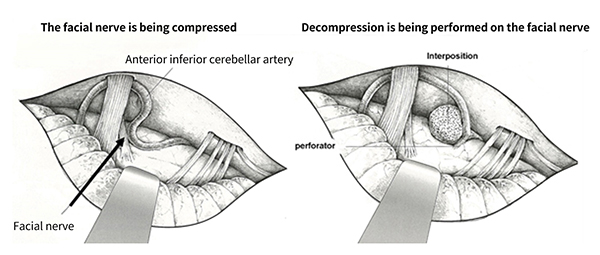
In over 90% of cases, the cause is compression of the nerve by a blood vessel.
Treatment
Treatment options for trigeminal neuralgia include medication, nerve blocks, radiation therapy, and surgery. Surgery involves repositioning the blood vessel compressing the nerve and is considered a curative treatment.
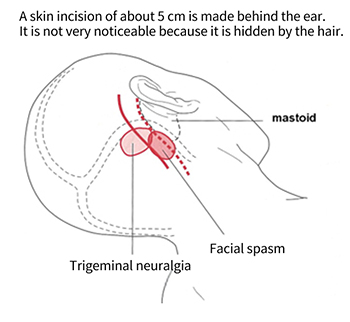
The procedure is called microvascular decompression. A 5-centimeter incision is made behind the ear, and a hole about the size of a 500-yen coin is drilled into the skull. Only a small amount of hair is shaved during this process. Using a surgical microscope, the compressing blood vessel is repositioned through this opening. The surgery takes 1 hour and 20 minutes and is performed under general anesthesia; patients can move freely the day after surgery. The hospital stay is approximately 10 days. Hearing loss is a potential complication of this surgery; however, to prevent this, we continuously monitor auditory brainstem responses throughout the procedure to minimize the risk of hearing loss.
Results
Most patients tell us they wish they had undergone the surgery sooner.
Video explanation of trigeminal neuralgia by Professor ONODA(in Japanese)
Treatment for hemifacial spasm
Characteristics of hemifacial spasm
- The right or left side of the face moves involuntarily.
- Some patients describe a sensation of tightness on one side of the face.
- It typically begins around the eyes and gradually spreads to the corners of the mouth.
- It may be accompanied by tinnitus.
Diagnosis, causes, treatment, and results
It is essentially the same as trigeminal neuralgia.The condition is almost always caused by vascular compression of the facial nerve, and microvascular decompression is an effective treatment. Another treatment option is Botox therapy.
If you experience throbbing pain in your face or involuntary twitching of the face, please come in for a consultation. We will first listen to your concerns and then proceed with an MRI scan or other necessary tests. We also accept patients seeking a second opinion who have been diagnosed at other hospitals.
Microvascular decompression surgery
Video explanation of hemifacial spasm by Professor ONODA(in Japanese)
Parkinson’s disease treated with surgery: “Deep Brain Stimulation(DBS)”
About Parkinson’s disease symptoms that can be improved with surgery
To patients with advanced Parkinson’s disease
- Do you experience “off” periods multiple times a day when your medication wears off?
- Do you suffer from involuntary movements (dyskinesia) that make it difficult to control your body?
- Do you have tremors that are not relieved by medication?
Are you struggling with any of these issues?
Have you heard of Deep Brain Stimulation(DBS)?
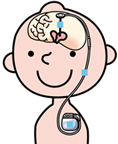
DBS works by delivering electrical stimulation to deep regions of the brain to modulate the signals involved in movement, thereby alleviating symptoms that cannot be controlled by medication. To deliver continuous electrical stimulation to the brain, a small stimulator is implanted in the body.
What you can expect from DBS
- Tremors and other motor symptoms caused by Parkinson’s disease are reduced It improves motor symptoms caused by medication wear-off and helps maintain a “on” state where medication is effective throughout the day
- It is possible to reduce the amount and frequency of medication taken
It can reduce medication side effects - Treatment can be administered while adjusting the intensity of the stimulation
- Symptoms that differ between the left and right sides of the body can be adjusted separately
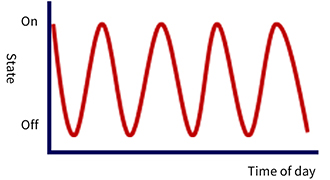
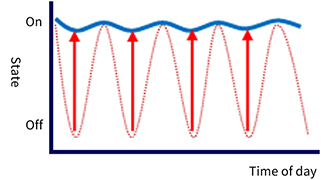
Please consult with your primary care physician and feel free to visit our specialized outpatient clinic. We will provide a detailed explanation of DBS treatment.
Our Neurosurgery Department provides safe and precise DBS surgery.
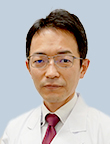
Neurosurgery, IUHW Narita Hospital
Specialized outpatient clinic
for tremors and involuntary movements
Every Tuesday
9:00 a.m. - 11: 30 a.m.
Regional Medical Liaison Office
Tel: 0476-35-5601
Clinic for normal pressure hydrocephalus(NPH)
Our department is also dedicated to the treatment of normal pressure hydrocephalus. Normal pressure hydrocephalus occurs when the flow of fluid (cerebrospinal fluid)inside the head becomes impaired. When flow is impaired, symptoms such as gait disturbances(slowed walking, small steps, and a shuffling gait), cognitive impairment(memory loss and decreased initiative), and urinary dysfunction(urinary incontinence)may occur. If tests confirm a diagnosis of normal pressure hydrocephalus, we perform a procedure(cerebrospinal fluid shunt surgery) to divert the accumulated cerebrospinal fluid to another location and restore its circulation within the body, thereby alleviating symptoms.
Our department is staffed by physicians with experience in over 100 cases of normal pressure hydrocephalus surgery, who oversee both diagnostic testing and treatment, including postoperative rehabilitation.
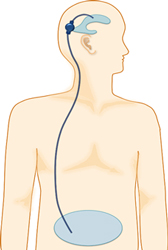
shunt surgery
(V-P shunt)
Diverts cerebrospinal fluid
from the brain to the abdomen
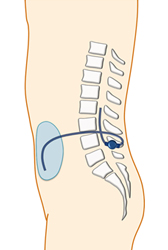
shunt surgery
(L-P shunt)
Diverts cerebrospinal fluid
from the spinal canal
to the abdomen
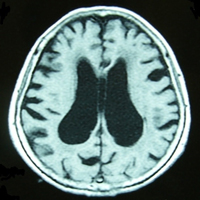
MRI sections
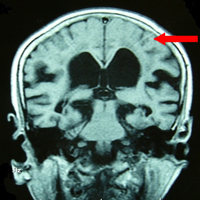
is the closure of the sulci
in the calvarium on the coronal section
Every Wednesday afternoon
For the hospital appointments, contact the Appointment Center
TEL:0476-35-5576(Monday to Saturday 8:30 a.m. - 17:15 p.m. excluding holidays)
Chronic headaches
Treatments are provided by specialists and instructors certified by the Japanese Headache Society. Chronic headaches include migraines, cluster headaches, tension-type headaches, and occipital neuralgia. The following explanation was compiled by Dr. MATSUNO under the supervision of Dr. MANAKA Shinya, Honorary Member (Former Director) of the Japanese Headache Society, Honorary Representative Director of the Japan Headache Association, Honorary Director of Manaka Hospital, and President of Headache University.
An excerpt from Hisashi Inoue’s play *Headache and Stiff Shoulders: Ichiyo Higuchi: “It hurts, my head. It feels like it’s going to split open. Someone, please split this head open with a hammer.” Additionally, from a conversation with Tatsuko Hikita(Source: Manabu Sakuta. Modern Physician 2000;20:791-796): “When I visited her, clattering along the wooden planks of the alleyway, she had brought her desk out to a spot where she could see the pond and was writing while wearing a headband, saying, ‘My headache is so severe I can’t stand it.’” “My shoulders are so stiff that even if you hit them hard, I wouldn’t feel a thing,” she once said, picking up a paperweight to demonstrate.
The above is quoted from Dr. MANAKA Shinya’s Headache University website regarding HIGUCHI Ichiyo’s headaches. It is clear that HIGUCHI Ichiyo suffered from severe, persistent migraines. According to Dr. MANAkA, famous figures known to have suffered from headaches include Beethoven, Haydn, Chopin, Joan of Arc, Van Gogh, Darwin, Graham Bell, and Einstein; among Japanese figures, they include ISHIKAWA Takuboku, HIGUCHI Ichiyo, AKUTAGAWA Ryunosuke, and ITSUKI Hiroyuki. Incidentally, the opening “da-da-da-dum” of Beethoven’s Symphony No. 5, “Fate,” is said to represent the thunderous roar of his migraine attacks.
While migraines have plagued these great figures, efforts have traditionally focused on treating attacks as they occur. Currently, triptan medications are the gold standard for acute migraine treatment. While triptan medications are highly effective, some people end up taking them too frequently. This is where we must be cautious of medication-overuse headaches. A medication-overuse headache is a condition in which the brain’s pain centers become hypersensitive due to the overuse of headache medication, causing even mild stimuli to be perceived as pain. In light of this, a new perspective on migraine prevention has gained attention in recent years. Lifestyle improvements include: 1. Avoiding both oversleeping and sleep deprivation(aim for 6.5 to 8.5 hours of sleep), 2. Avoiding low blood sugar and eating a proper breakfast, 3. Consuming plenty of magnesium and vitamins(from vegetables, seaweed, and legumes), 4. Avoiding glare and loud noises; wear sunglasses(red-tinted ones are best), 5. Keep outings and shopping trips brief; 6. Food(avoid if you suspect any triggers): red wine, alcohol, chocolate, cheese, and nitrites(found in hot dogs)-it is recommended to limit these as much as possible. Migraine preventive medications include calcium channel blockers, antidepressants, beta-blockers, antiepileptic drugs, and galcanezumab, so please consult your primary care physician. Taking preventive medication daily reduces the frequency and severity of headaches. Since preventive medications do not take effect immediately, it is important to understand that it may take time(2–3 months)for the benefits to become apparent. It is estimated that there are 8.4 million migraine sufferers in Japan, yet only 3% of them receive ongoing medical care. Migraines are said to interfere with daily life for 74% of sufferers, shortening healthy life expectancy by 2 years and resulting in an annual economic loss of 288 billion yen. This underscores just how important it is to properly prevent migraines. Finally, I’d like to touch on migraines in children. Migraines in children differ in nature from those in adults and are often not correctly recognized; some cases of cyclic vomiting, abdominal pain episodes, and dizziness attacks are also considered a form of migraine. Care must be taken, as migraines in children are easily misunderstood as psychological issues.
【In a school nurse’s office】
– Student: “My head hurts, so I want to rest in a dark, quiet place.”
– Teacher: “It’s because you have such a gloomy personality that your head hurts. Go run around in a bright place.”
This approach will only make the migraine worse.
【At home】
– The mother said, “Summer vacation is over,” and pulled back the blankets.
– However, the child couldn’t lift their head due to the migraine.
– As a result, they couldn’t go to school.
Finally, the Sanjusangendo Temple in Kyoto is said to have been built to pray for the recovery of Emperor Go-Shirakawa, who suffered from headaches.
For migraine patients for whom existing preventive medications have been insufficiently effective, a new medication(injection)that inhibits calcitonin gene-related peptide(CGRP)is now available.
Spasticity
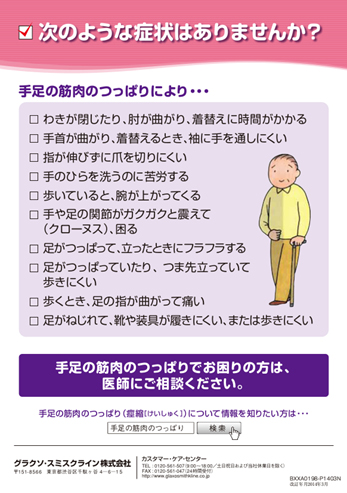
Spasticity is a condition characterized by increased muscle tone in the limbs, often resulting from conditions such as stroke, brain tumors, severe head trauma, or spinal cord injury, and it significantly hinders rehabilitation.
For this condition, the following two treatment methods are effective, both of which are available in our department:
1.Intrathecal baclofen administration(in Japanese)
2. Botulinum toxin therapy(in Japanese)
Please review the checklists below to assess your symptoms(in Japanese).
If you have any concerns, please feel free to schedule a consultation.
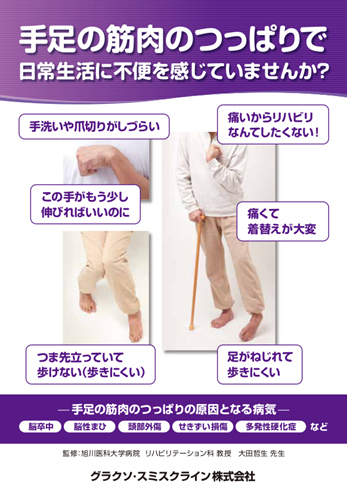
Surgical performance
※You can scroll horizontally to view more.
| Number of Neurosurgery cases | January–December 2022 | January–December 2021 | |
|---|---|---|---|
| Brain tumors | (1)Excision | 32 | 27 |
| (2)Biopsy(craniotomy) | 6 | 1 | |
| (2)Biopsy(stereotactic surgery) | 0 | ||
| (3)Transsphenoidal surgery | 6 | 5 | |
| (4)Wide-area skull base tumor resection and reconstruction surgery | 0 | ||
| Other | 0 | ||
| Cerebrovascular disorders | (1)Ruptured aneurysm | 8 | 6 |
| (2)Unruptured aneurysm | 15 | 14 | |
| (3)Cerebral arteriovenous malformation | 1 | ||
| (4)Carotid endarterectomy | 4 | 3 | |
| (5)Bypass surgery | 4 | 8 | |
| (6)Hypertensive intracerebral hemorrhage(craniotomy hematoma evacuation) | 3 | 5 | |
| (6) Hypertensive intracerebral hemorrhage(stereotactic surgery) | 0 | ||
| Other | 14 | 13 | |
| Trauma | (1)Acute epidural hematoma | 0 | |
| (2)Acute subdural hematoma | 2 | 4 | |
| (3)Decompressive craniectomy | 2 | ||
| (4)Chronic subdural hematoma | 39 | 28 | |
| Other | 4 | ||
| Malformation | (1)Skull and brain | 0 | |
| (2)Spinal cord and spine | 0 | ||
| Other | 0 | ||
| Hydrocephalus | (1)Ventricular shunt surgery | 16 | 21 |
| (2)Endoscopic surgery | 2 | 0 | |
| Other | 9 | 2 | |
| Spine and spinal cord | (1)Tumor | 0 | |
| (2)Arteriovenous malformation | 1 | ||
| (3)Degenerative disease(degenerative spondylosis) | 68 | ||
| (3)Degenerative disease(intervertebral disc herniation) | 6 | ||
| (3)Degenerative disease(ossification of the posterior longitudinal ligament) | 2 | ||
| (4)Syringomyelia | 0 | ||
| Other | 2 | 5 | |
| Functional surgery | (1)Epilepsy | 8 | |
| (2)Involuntary movement and refractory pain(stimulation therapy) | 1 | 1 | |
| (2)Involuntary movements and refractory pain(destructive procedures) | 0 | ||
| (3)Cranial nerve decompression surgery | 67 | 22 | |
| Other | 0 | ||
| Endovascular surgery | (1)Aneurysm embolization(ruptured aneurysm) | 8 | 6 |
| (1)Aneurysm embolization(unruptured aneurysm) | 5 | 10 | |
| (2)Arteriovenous malformation(brain) | 0 | 5 | |
| (2)Arteriovenous malformation(spinal cord) | 0 | 0 | |
| (3)Total number of occlusive cerebrovascular disease cases | 31 | 24 | |
| (3)(Of the above, cases using stents) | 14 | 11 | |
| Other | 17 | 11 | |
| Stereotactic(brain) Radiation therapy |
(1)Tumor | 0 | |
| (2)Cerebral arteriovenous malformation | 0 | ||
| (3)Functional disorders | 0 | ||
| Other | 0 | ||
| Other | Cases that do not fall into any of the above categories | 11 | 8 |
| Total number of Neurosurgery operations | 302 | 321 | |
Information on the JND Database Project
Our department is collaborating with the “Japan Neurosurgical Database (JND) Project” of the Japan Neurosurgical Society. The purpose of the JND is to analyze clinical data from hospitalized patients to help evaluate the quality of neurosurgical care. Participation in this project is based on the patient’s free will, and if you do not wish to participate, you may refuse to have your data registered.
Please note that refusing to participate will in no way result in any disadvantage to you in your daily medical care or treatment.
For more details, please refer to the PDF below(in Japanese)
A request to patients who have received neurosurgery treatment at IUHW Narita Hospital