- HOME
- Departments & Centers
- Allergy and Rheumatology
Allergy and Rheumatology
Message from the representative
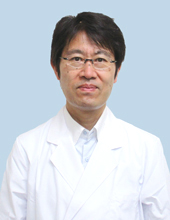
Physician-in-chief, Allergy and Rheumatology Department
Senior Professor, Allergy and Rheumatology, IUHW School of Medicine
HIROSE Koichi, M.D., Ph.D.
We provide optimal, tailored care using the latest diagnostic and treatment methods.
It is estimated that half of the population suffers from some form of allergic disease. For these conditions, we offer drug therapy as well as the latest treatments, such as immunotherapy. We also utilize state-of-the-art diagnostic tools, such as joint ultrasound examinations, to deliver the best possible care.
As well as treating allergic diseases such as hay fever and bronchial asthma, we also treat rheumatoid arthritis and connective tissue diseases caused by immune disorders.
Aiming for early treatment and world-class standards
Our department aims to achieve early diagnosis and treatment of allergic diseases such as collagen diseases and asthma using joint ultrasound (joint echo)examinations. Although significant progress has been made in treating collagen diseases and allergic conditions, with dramatic improvements in treatment outcomes, we are quick to adopt world-class treatments to provide optimal care for each patient.
Comprehensive treatment is available
In recent years, as the population has aged, the incidence of rheumatoid arthritis and collagen diseases in older adults has increased, making the treatment of complications increasingly important.
Rehabilitation can help patients with rheumatoid arthritis maintain a normal daily life over the long term. We provide comprehensive care in collaboration with other departments and rehabilitation staff.
Community collaboration
A major strength of our department is our ability to collaborate with several major hospitals, including the Department of Allergy and Rheumatology at Chiba University Hospital. We aim to further develop these partnerships to become an even more closely integrated part of the local community.
Main target diseases
Arthritis conditions such as rheumatoid arthritis and connective tissue diseases; allergic conditions such as bronchial asthma and hay fever.
Highlights of the department
Below is an overview of the representative conditions treated by our department and the features of our treatments.
Rheumatoid arthritis
We use joint ultrasound(joint echo)for diagnosis and assessment of disease activity, and this approach is widely adopted. In our department, we use ultrasound to diagnose the condition and assess disease activity based on the patient’s status, in order to provide appropriate treatment.
In addition to offering new treatments such as biologic agents, we also focus on rehabilitation in collaboration with the Department of Rehabilitation at the hospital for postoperative cases and those with advanced joint destruction.
Joint ultrasound(joint echo)examination
X-ray images allow us to observe the condition of bones and joints, but they cannot measure inflammation in the periosteum, as in the case of rheumatoid arthritis.
The synovial membrane of an inflamed joint becomes thicker and exhibits increased blood flow compared to a healthy joint. By observing blood flow through a joint ultrasound examination, we can assess the degree of inflammation.
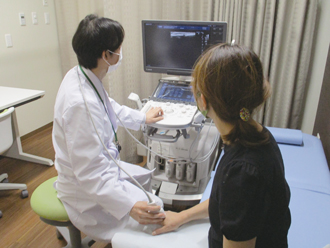
monitoring the status of inflammation.
Collagen/connective tissue diseases
Our hospital includes departments of Pulmonology, Nephrology, General Medicine and Infectious Diseases, allowing us to appropriately manage pulmonary and renal complications associated with rheumatoid arthritis and collagen diseases.
Furthermore, by collaborating with the General Medicine and Infectious Diseases departments, we can address difficult-to-diagnose cases, such as those involving fever of unknown origin.
Bronchial asthma
We use peak flow testing, exhaled nitric oxide (FeNO) testing and spirometry to assess allergic inflammation in the airways more accurately in the treatment of bronchial asthma.
We provide thorough management and treatment for conditions ranging from mild asthma to refractory asthma using inhaled medications and new antibody therapies.
Allergies
Our department can identify allergens using 'intradermal testing'. This involves injecting allergens into the skin and observing the resulting reaction over a set period of time. This method offers superior sensitivity and specificity compared to the conventional 'specific IgE antibody test', which involves taking a blood sample to check for IgE antibodies against specific allergens in the serum.
Additionally, for allergic rhinitis caused by cedar pollen or house dust mite, we offer allergen immunotherapy, a treatment method that is gaining attention as a potential cure.
Other specialty fields and unique treatments
We also offer joint ultrasound examinations, diagnosis of giant cell arteritis using FDG-PET, allergen immunotherapy for hay fever and allergic rhinitis, exhaled nitric oxide (FeNO) measurement in asthma management and guidance on the use of inhaled steroids.
Clinical indicators
Number of joint ultrasound examinations performed
| FY2020 | 307 |
|---|---|
| FY2021 | 437 |
| FY2022 | 422 |
| Total | 1,166 |
Number of patients treated with biologics
| FY2020 | 200 |
|---|---|
| FY2021 | 436 |
| FY2022 | 739 |
| Total | 1,375 |
Number of patients treated with JAK inhibitors
| FY2020 | 8 |
|---|---|
| FY2021 | 37 |
| FY2022 | 42 |
| Total | 87 |
Number of inpatients
※You can scroll horizontally to view more.
| FY2020 | FY2021 | FY2022 | FY2023 | |
|---|---|---|---|---|
| Total number of patients | 48 | 78 | 147 | 192 |
| Systemic lupus erythematosus | 1 | 5 | 6 | 9 |
| Myositis-related | 10 | 7 | 6 | 10 |
| Scleroderma | 3 | 3 | 4 | 5 |
| Mixed connective tissue disease | 0 | 1 | 1 | 5 |
| Sjögren's syndrome | 0 | 0 | 1 | 2 |
| Vasculitis | 7 | 10 | 17 | 19 |
| Rheumatology-related | 8 | 13 | 18 | 41 |
| Adult Still's disease | 1 | 2 | 1 | 4 |
| Bronchial asthma | 4 | 6 | 2 | 6 |