- HOME
- Departments & Centers
- Diabetes, Metabolism and Endocrinology
Diabetes, Metabolism and Endocrinology
We provide state-of-the-art medical care for all aspects of diabetes, metabolism, and endocrine disorders. We treat a wide range of conditions, including general adult diseases and high-risk conditions such as diabetes during pregnancy.
Reliable care through multidisciplinary collaboration
We address a broad spectrum of diabetes-related conditions through collaboration among a multidisciplinary team, including physicians, certified diabetes educators, dietitians, and physical therapists.
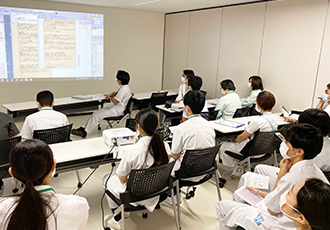
For hospitalized cases, we hold weekly multidisciplinary discussions to ensure the highest quality of care.
We actively collaborate with various surgical departments to provide advanced treatment
Particularly for endocrine disorders, we provide advanced treatment across various fields through collaboration with Neurosurgery, Orthopedics, and Renal & Urological Surgery departments.
Main target diseases
Type 1 diabetes, Type 2 diabetes, other forms of diabetes, dyslipidemia(hypercholesterolemia, hypertriglyceridemia, low HDL cholesterol), metabolic syndrome, atherosclerosis, gout, endocrine disorders(thyroid disorders, adrenal disorders, secondary hypertension, etc.)
Highlights of the department
- 1. Comprehensive diabetes care through multidisciplinary collaboration(diabetes)
-
- We provide reliable care guidance by collaborating with a multidisciplinary team including nurses, pharmacists, registered dietitians, physical therapists, and certified diabetes educators.
- We manage not only diabetes complications, diabetes during pregnancy, diabetes in the elderly, and gestational diabetes, but also high-risk pregnancies such as those complicated by thyroid disorders.
- In particular, we aim to increase the number of healthy elderly patients with diabetes by combining dietary therapy provided by registered dietitians with muscle-strengthening exercises led by physical therapists to prevent sarcopenia and frailty(age-related loss of muscle mass and weakness).
- 2. Collaboration with surgical departments(diabetes, metabolic, and endocrine disorders)
-
We provide advanced treatment through close collaboration with the surgery and radiology departments at our hospital and affiliated hospitals within our group.
※You can scroll horizontally to view more.
・Management of diabetic foot lesions Orthopedics, Plastic and Reconstructive Surgery, Vascular Surgery ・Management of severe obesity Hepato-Biliary-Pancreatic and Gastrointestinal Surgery, Anesthesiology, Rehabilitation ・Management of hypothalamic-pituitary disorders Neurosurgery ・Radioisotope therapy for Graves' disease Radiology ・Cytology and treatment of thyroid and parathyroid tumors Otorhinolaryngology and Head & Neck Surgery ・Diagnosis and management of osteoporosis Orthopedics ・Diagnosis of adrenal disorders, particularly primary aldosteronism Radiology ・Management of adrenal disorders such as pheochromocytoma and Cushing's syndrome Renal and Urological Surgery
- 3. Specialized care for dyslipidemia and severe obesity
-
- We provide genetic diagnosis, treatment, and management for high LDL cholesterol, hypertriglyceridemia, and low HDL cholesterol.
- For severe obesity, we offer a variety of weight-loss treatments through multidisciplinary collaboration involving nurses, registered dietitians, and physical therapists. We also offer cognitive behavioral therapy through the Psychiatry Department and bariatric surgery through the Hepato-Biliary-Pancreatic and Gastrointestinal Surgery Department.
What is metabolic syndrome?
The two images below are plain abdominal CT scans taken at the level of the navel. The blue areas indicate subcutaneous fat, and the red areas indicate visceral fat.
The image on the right shows a patient with "subcutaneous fat accumulation type obesity." The image on the left shows a patient with "visceral fat accumulation type obesity." When this type of obesity is accompanied by two or more of the following conditions—impaired glucose tolerance, hypertension, or dyslipidemia—it is referred to as metabolic syndrome.
To determine if obesity increases disease risk, it is necessary to assess where fat accumulates in the body.
If a person's waist circumference is 85㎝ or more for men and 90㎝ or more for women, visceral fat accumulation(an area of visceral fat of 100㎠ or more as seen on a CT scan)is suspected, and caution is advised.
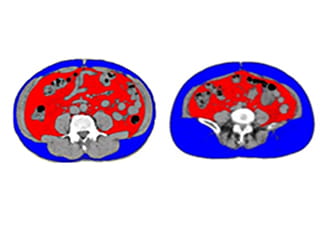
accumulation of visceral fat (red)
Diabetes: the root of all illnesses
- Symptoms that are hard to detect and complications that progress silently
- Diabetes often presents no symptoms, leading some people to ignore it. If left untreated, various diseases(complications)progress silently. One day, you may suddenly develop gangrene(foot necrosis), blindness, heart disease, or a stroke, and you may also develop cancer or dementia. Treatment methods vary depending on the patient’s condition. Self-administered treatments based on information found on TV or the Internet can sometimes cause new health issues, so caution is necessary.
- Early diagnosis and treatment to prevent complications
- Lifestyle habits and genetic predisposition play a role in the development of diabetes. If you have gained nearly 10㎏ since your previous weight, have a family history of diabetes, or are concerned about developing the condition, please feel free to consult us. Knowing whether you have diabetes is the first step toward a healthy, long life.
- IUHW Narita Hospital provides optimal, state-of-the-art testing and treatment
- Our diabetes specialists and medical staff work together to provide the best possible diabetes management. Patients who meet the criteria can use 24-hour glucose monitors or insulin pumps.
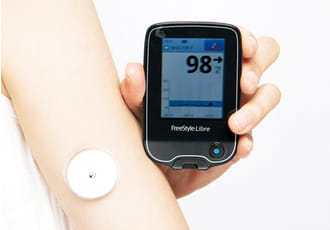
24 - hour glucose monitor:
Simply attach a sticker - like sensor to your arm and hold the device over it to track your blood glucose levels throughout the day.
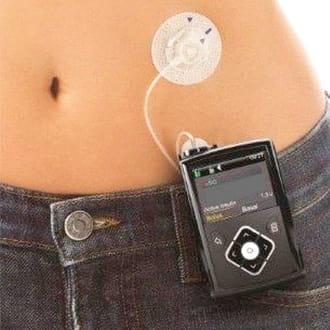
 Insulin pump:
You can administer insulin with precise adjustments without having to insert a needle every time. It can also be linked to a glucose monitor.
About weight loss treatment
Articles by Professor TAKEMOTO Minoru on obesity and weight loss(in Japanese)
- Obesity① “Obesity is the root of all illnesses”
- Obesity② “Pharmacological treatment for obesity”
- Obesity③ “Surgical treatment for obesity”
Difference between obesity and obesity syndrome
“Obesity” refers to a condition where fat accumulates in the body and body weight increases, but it is not a disease. The degree of “obesity” is expressed by BMI(Body Mass Index), calculated as BMI = Weight(kg)÷Height(m)÷ Height(m); a BMI of 25 or higher is classified as “obesity.”
On the other hand, “obesity syndrome” refers to a condition where “obesity” results primarily from excessive accumulation of visceral fat, leading to adverse health effects(health complications), and requires treatment as a disease. Health complications range widely and include metabolic disorders (such as diabetes, dyslipidemia, hypertension, and hyperuricemia), diseases caused by blocked arteries(such as coronary artery disease and cerebral infarction), and conditions resulting from excess weight(such as sleep apnea syndrome and knee osteoarthritis). (See Table 1)
| 1. Glucose tolerance disorders(type 2 diabetes, impaired glucose tolerance, etc.) |
| 2. Dyslipidemia |
| 3. Hypertension |
| 4. Hyperuricemia and gout |
| 5. Coronary artery disease: myocardial infarction and angina pectoris |
| 6. Cerebral infarction: cerebral thrombosis and transient ischemic attack(TIA) |
| 7. Fatty liver(non-alcoholic fatty liver disease / NAFLD) |
| 8. Menstrual disorders, infertility |
| 9. Sleep apnea syndrome(SAS)and obesity hypoventilation syndrome |
| 10. Musculoskeletal disorders: osteoarthritis(knee, hip), degenerative spinal disease, osteoarthritis of the fingers |
| 11. Obesity-related kidney disease |
Severe obesity requires more rigorous treatment
“Obesity” with a BMI of 35 or higher is distinguished as “severe obesity.” Because individuals with severe obesity are more prone to health complications and often face psychological and social challenges, they require more rigorous treatment and management.
Obesity treatment
①Diet therapy, ②exercise therapy, and ③behavioral therapy form the foundation of treatment. Depending on the situation, ④drug therapy(oral medications or injections)and ⑤surgical therapy may also be combined to facilitate weight loss.
Diet therapy involves moderately consuming the proteins, vitamins, and minerals necessary to maintain bones, muscles, and the body’s metabolism, while minimizing the intake of carbohydrates and fats as much as possible. Exercise therapy involves strength training to maintain muscle mass—which burns energy — and aerobic exercise to directly burn calories. Behavioral therapy focuses on effectively managing environmental factors and stress, and devising strategies to maintain motivation, thereby ensuring treatment adherence. Drug therapy may involve appetite suppressants(whose use is limited in terms of duration and specific conditions)or, in cases where diabetes is a comorbidity, diabetes medications that facilitate weight loss.
About surgical therapy
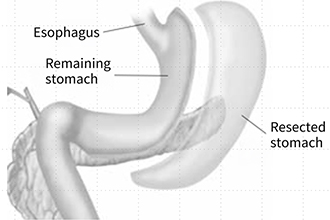
You can undergo gastric sleeve surgery at our hospital’s Gastrointestinal Surgery Department. This procedure is covered by the national health insurance and intended for individuals up to age 65 with "severe obesity"(BMI 35 or higher).(Please note that individuals with a BMI of 32 or higher or who are over 65 may also be eligible. Please consult us if you are interested.)This surgery is said to lead to an average weight loss of approximately 30%, as well as various other positive effects. For example, about 60 – 80% of patients are able to stop taking oral or injectable diabetes medications. If you decide to undergo surgery, however, you must first receive treatment from an internal medicine specialist for at least six months. You must also undergo a one- to two-week weight-loss hospitalization in the internal medicine department prior to surgery and successfully quit smoking by the time of surgery. It is also important to note that the surgery will not resolve all problems. You must continue an appropriate diet, exercise regimen, and behavioral therapy even after surgery.
Information on self-pay treatment (patient-selected services) for intermittent scanning continuous
glucose monitors(FreeStyle Libre 2) As of June 2024, the intermittent scanning continuous glucose monitor(FreeStyle Libre 2)has been designated as a "patient-selected" medical service by the Ministry of Health, Labor and Welfare. Our hospital is registered as a medical institution authorized to use intermittent scanning continuous glucose monitors (excluding use as a medical treatment listed in the medical fee calculation guidelines). Patients concerned about glucose spikes or interested in this technology are welcome to contact us.
Clinical indicators
Hospitalization
※You can scroll horizontally to view more.
| Total number of people(aggregate) | FY2020 | FY2021 | FY2022 | FY2023 | FY2024 |
|---|---|---|---|---|---|
| Type 1 diabetes | 8 | 10 | 8 | 14 | 9 |
| Type 2 diabetes | 87 | 161 | 143 | 129 | 133 |
| Including preoperative blood glucose management | 38 | 85 | 67 | 52 | 19 |
| Other diabetes | 2 | 2 | 6 | 2 | 4 |
| Gestational diabetes / Pregnancy complicated by diabetes | 7 | 9 | 4 | 0 | 0 |
| Hyperglycemic acute metabolic disorder | 9 | 11 | 6 | 6 | 19 |
| Hypoglycemia | 2 | 3 | 7 | 8 | 3 |
| Severe obesity | 8 | 3 | 11 | 4 | 5 |
| Pituitary disease | 2 | 11 | 5 | 3 | 7 |
| Thyroid disease | 2 | 2 | 0 | 2 | 3 |
| Adrenal disease | 8 | 9 | 3 | 7 | 2 |
| Including adrenal venous sampling | 3 | 4 | 3 | 1 | 1 |
| Electrolyte disorder | 3 | 4 | 5 | 3 | 16 |
| Other | 7 | 42 | 73 | 62 | 61 |
| Including COVID-19 | 23 | 6 | 11 | ||
| Total | 145 | 267 | 271 | 240 | 263 |
Outpatient
※You can scroll horizontally to view more.
| Total number of people(aggregate) | FY2020 | FY2021 | FY2022 | FY2023 | FY2024 |
|---|---|---|---|---|---|
| Type 1 diabetes | 117 | 298 | 486 | 742 | 747 |
| Type 2 diabetes | 3,488 | 8,746 | 11,224 | 12,575 | 12,372 |
| Borderline diabetes | 51 | 163 | 178 | 51 | 43 |
| Other diabetes | 88 | 73 | 2,002 | 1,988 | 2,170 |
| Gestational diabetes / Pregnancy complicated by diabetes | 122 | 307 | 171 | 294 | 110 |
| Hypoglycemia | 21 | 18 | 36 | 11 | 19 |
| Hypertension | 64 | 179 | 161 | 164 | 200 |
| Severe obesity | 68 | 134 | 118 | 101 | 219 |
| Dyslipidemia | 425 | 1,290 | 1,587 | 979 | 858 |
| Hyperuricemia / gout | 75 | 182 | 198 | 97 | 86 |
| Pituitary disease | 32 | 124 | 97 | 170 | 271 |
| Thyroid disease | 696 | 1,727 | 2,055 | 1,763 | 2,178 |
| Parathyroid disease | 20 | 42 | 55 | 36 | 71 |
| Adrenal disease | 147 | 239 | 361 | 306 | 133 |
| Electrolyte disorder | 50 | 98 | 204 | 186 | 342 |
| Osteoporosis | 11 | 32 | 16 | 21 | 26 |
| Malnutrition / nutritional deficiency | 49 | 186 | |||
| Other | 91 | 179 | 639 | 246 | 653 |
| Total | 5,566 | 13,831 | 19,588 | 19,779 | 20,724 |