- HOME
- Departments & Centers
- Hematology
Hematology
We provide comprehensive care for a wide range of blood and lymphatic tissue diseases, including malignant lymphoma, acute and chronic leukemia, multiple myeloma, anemia, and bleeding disorders.
We provide not only standard chemotherapy but also cutting-edge treatments with targeted therapies.
Our goal is to accurately assess each patient's condition, including the type of disease and potential treatment-related side effects. This allows us to select the most appropriate medication. We develop optimal treatment plans that consider each patient's background and preferences.
In addition to conventional anticancer drug therapy, we incorporate new molecularly targeted drugs that specifically target certain molecules, to improve treatment outcomes.
We feature one of Japan's leading protective environments
Powerful anticancer drug therapy for diseases such as leukemia and malignant lymphoma can temporarily reduce the number of white blood cells in the blood, which increases the risk of infection. Our hospital boasts one of Japan's leading protective environments, with 36 treatment rooms that enable treatment under maximum infection-control facilities.
We actively pursue allogeneic hematopoietic stem cell transplantation
Allogeneic hematopoietic stem cell transplantation is a treatment for patients with leukemia that cannot be cured with chemotherapy alone or for diseases that interfere with the production of normal blood. This procedure involves administering anticancer drugs or total-body irradiation, followed by transplanting hematopoietic stem cells from a healthy donor. This cures the disease and enables the production of normal blood. Our department performs transplants in the highest level of infection control.
Main target diseases
Malignant lymphoma, acute leukemia/myelodysplastic syndrome, chronic myeloid leukemia, myeloproliferative disorders, multiple myeloma, anemia, and bleeding disorders.
Highlights of the department
Please feel free to visit our department if you experience any of the following symptoms:
- Swelling of lymph nodes in the neck or armpits
- Your primary care physician has recommended a detailed examination due to concerns such as "possible lymphoma"
- Health checkups have indicated a low or high white blood cell count, anemia, or a low platelet count
- 1.Malignant Lymphoma
-
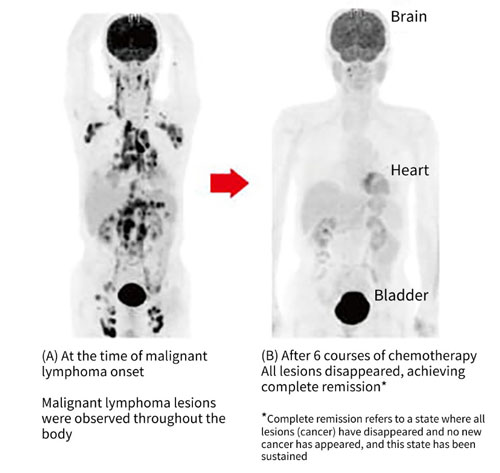
Treatment outcomes have significantly improved with the advent of effective drugs. Malignant lymphoma encompasses many subtypes, each requiring a distinct treatment approach. We perform precise histopathological diagnoses by sampling the lesion and classifying the disease stage using tests such as PET-CT scans. We then administer the optimal treatment, which may include chemotherapy with anticancer drugs, molecular targeted therapy (e.g., Rituximab or Polatuzumab), or radiation therapy.
- 2.Acute leukemia and myelodysplastic syndrome
-
We provide optimal chemotherapy and supportive care tailored to each patient. When appropriate, we also perform allogeneic hematopoietic stem cell transplantation. Because treatment often continues over a long period, careful management of side effects is essential. Our multidisciplinary team—including physicians, nurses, and pharmacists—works together to support each patient throughout their treatment.
- 3.Chronic myeloid leukemia
-
The advent of selective tyrosine kinase inhibitors, such as Imatinib, Nilotinib, and Dasatinib, has dramatically improved treatment outcomes. Oral therapy with these drugs enables many patients to resume social activities similar to those before diagnosis. We select optimal medications tailored to each patient.
- 4.Multiple myeloma
-
Numerous groundbreaking drugs, such as Bortezomib, Lenalidomide, and Daratumumab, have significantly improved treatment outcomes. We effectively combine these drugs for treatment. If high-dose chemotherapy is necessary, we perform autologous hematopoietic stem cell transplantation therapy. In this procedure, your own hematopoietic stem cells are collected and then transplanted after high-dose chemotherapy.
- 5.Anemia and bleeding disorders
-
Diseases that cause anemia include iron deficiency anemia, hemolytic anemia, vitamin B12 deficiency anemia, and aplastic anemia. Bleeding disorders include conditions such as idiopathic thrombocytopenic purpura and hemophilia, each of which requires a different treatment approach. If your health checkup shows anemia or thrombocytopenia, please feel free to visit us.
Other specialty fields and unique treatments
We provide specialized care for rare diseases and specialized medical treatments, including molecular targeted therapy for polycythemia vera, multidisciplinary treatment for primary amyloidosis and POEMS syndrome, and coagulation factor replacement therapy for hemophilia.
Clinical indicators
Inpatient and outpatient statistics
| Fiscal year | 2020 | 2021 | 2022 | 2023 | 2024 |
|---|---|---|---|---|---|
| Total inpatients | 2,709 | 3,427 | 4,251 | 6,174 | 8,013 |
| Number of hospitalized cases | 154 | 215 | 265 | 416 | 573 |
| Average length of stay (days) | 17.6 | 15.9 | 16.0 | 16.3 | 15.2 |
| Total outpatients | 2,279 | 4,460 | 5,610 | 6,646 | 7,583 |
| New outpatients | 436 | 579 | 770 | 832 | 845 |
Hematopoietic stem cell transplantation
| Fiscal year (Jan – Dec) | 2020 | 2021 | 2022 | 2023 | 2024 |
|---|---|---|---|---|---|
| Hematopoietic stem cell transplantation | 2 | 7 | 9 | 17 | 14 |
| Autologous peripheral blood stem cell transplantation | 2 | 7 | 7 | 12 | 9 |
| Allogeneic hematopoietic stem cell transplantation | 0 | 0 | 2 | 5 | 5 |
Hematologic diseases registered by Japanese Society of Hematology (JSH)
| Fiscal year | 2020 | 2021 | 2022 | 2023 | 2024 |
|---|---|---|---|---|---|
| Number of hematologic diseases registered by JSH | 75 | 108 | 131 | 173 | 183 |
| Diagnostic breakdown | |||||
| Malignant lymphoma | 34 | 43 | 56 | 57 | 57 |
| Diffuse large b-cell lymphoma | 20 | 19 | 26 | 14 | 22 |
| Follicular lymphoma | 10 | 6 | 6 | 7 | 9 |
| MALT lymphoma | 1 | 8 | 4 | 11 | 2 |
| Mantle cell lymphoma | 0 | 2 | 2 | 1 | 2 |
| T-cell lymphoma | 2 | 6 | 7 | 5 | 4 |
| Hodgkin lymphoma | 1 | 2 | 6 | 4 | 4 |
| Other malignant lymphomas | 0 | 0 | 5 | 15 | 14 |
| Acute myeloid leukemia | 2 | 2 | 5 | 11 | 12 |
| Acute promyelocytic leukemia | 0 | 1 | 2 | 1 | 1 |
| Acute lymphoblastic leukemia | 0 | 5 | 2 | 3 | 3 |
| Chronic myeloid leukemia | 3 | 3 | 2 | 6 | 2 |
| Myelodysplastic syndrome | 5 | 12 | 7 | 19 | 20 |
| Polycythemia vera | 1 | 1 | 1 | 5 | 3 |
| Essential thrombocythemia | 2 | 2 | 4 | 2 | 4 |
| Multiple myeloma | 11 | 14 | 14 | 18 | 19 |
| M-proteinemia of unknown pathological significance | 3 | 4 | 6 | 6 | 9 |
| AL amyloidosis | 0 | 1 | 5 | 2 | 3 |
| Primary macroglobulinemia | 2 | 2 | 2 | 0 | 2 |
| Idiopathic thrombocytopenic purpura | 5 | 4 | 6 | 15 | 8 |
| Aplastic anemia | 2 | 2 | 2 | 3 | 7 |
| Thalassemia | 2 | 2 | 6 | 5 | 2 |
| Other diseases | 3 | 10 | 11 | 20 | 31 |
| Total | 75 | 108 | 131 | 173 | 183 |