- HOME
- Departments & Centers
- Neurology
Neurology
We work closely with the Neurosurgery Department to provide emergency neurological care, including treatment for cerebrovascular disorders (strokes). We also diagnose and treat a wide range of neurological conditions, from common disorders such as dementia, epilepsy, and headaches to rare and intractable neurological diseases.
If you are concerned about numbness, dizziness, or memory loss
If you are experiencing symptoms such as numbness, dizziness, or memory loss, it may indicate a disorder affecting the brain, spinal cord, nerves, or muscles.
We can accurately diagnose and appropriately treat conditions such as cerebrovascular disorders, Parkinson's disease, Guillain–Barré syndrome and myositis through thorough physical examinations, imaging studies and various tests.
We provide advanced rehabilitation
Following diagnosis and initial treatment, our neurology specialists work with the rehabilitation department to provide advanced, personalized rehabilitation as needed.
Main target diseases
Cerebrovascular disorders, epilepsy, Parkinson’s disease, spinocerebellar degeneration, multiple sclerosis, amyotrophic lateral sclerosis (ALS), Guillain-Barré syndrome, myasthenia gravis, myositis, muscular dystrophy, etc.
Highlights of the department
- 1. We provide a team-based approach to neurological emergencies
- Neurological emergencies such as cerebrovascular disorders(stroke), including cerebral infarction and hemorrhage, epilepsy, and impaired consciousness require immediate intervention. The Department of Neurology has established an emergency care system in collaboration with Neurosurgery and Emergency Medicine to provide the best possible treatment.
- 2. We provide comprehensive care for rare neurological diseases
- Accurate diagnosis is crucial for the management of neurodegenerative diseases such as Parkinson’s disease and amyotrophic lateral sclerosis(ALS). Our department utilizes various imaging tests and electrophysiological examinations to make diagnoses. Additionally, for neuroimmunological diseases such as myasthenia gravis and multiple sclerosis, treatment outcomes vary significantly depending on the choice and method of therapy. Our department addresses these conditions using the latest treatment strategies.
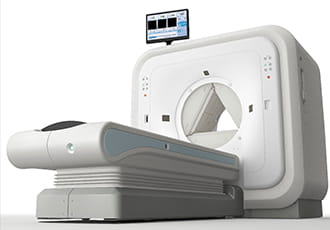
assessing functional changes in blood flow and metabolism
- 3. A comprehensive approach to dementia
- We provide accurate diagnoses of dementia using head MRI, detailed neuropsychological testing, and SPECT, which allows us to assess functional changes such as cerebral blood flow and metabolism. Based on these findings, we take a holistic approach to dementia, including treatment, follow-up care, and support for families.
Other specialty fields and unique treatments
- Urinary dysfunction and defecation disorders related to various neurological disorders
- Immunotherapy such as blood purification therapy and immunoglobulin dosage
- Advanced medical treatments for Myasthenia gravis, etc.
Introduction to the Rehabilitation Center
At our Rehabilitation Center, we collaborate with a wide range of medical departments to provide high-quality rehabilitation services.
- A robust team of approximately 60 rehabilitation staff members at full capacity
- We provide high-quality, tailored rehabilitation services for patients from various medical departments, a unique service offered by the International University of Health and Welfare's affiliated hospital.
- Facilities on par with or exceeding those of specialized rehabilitation hospitals
- The Rehabilitation Center, located on the second floor of the main Hospital Building and centered around training rooms, covers approximately 1,200㎡, making it one of the largest centers in Japan. The Health Promotion Center in the Health Checkup Building also features a pool and a gym. These facilities allow us to provide exercise-based rehabilitation from the early postoperative period.
- We actively offer advanced rehabilitation services
- We provide advanced rehabilitation training, including robotic rehabilitation, through a four- to eight-week inpatient program.
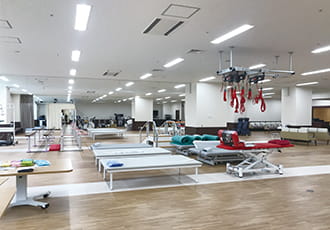
of the Hospital Building
Clinical indicators
Breakdown of hospitalized patients
| Disease categories | FY 2022 | |
|---|---|---|
| Cerebrovascular disorders | 108 | |
| Neurodegenerative diseases | Motor neuron disease | 17 |
| Extrapyramidal disorders | 16 | |
| Cerebellar disease | 15 | |
| Dementia | 7 | |
| Demyelinating diseases | 2 | |
| Encephalitis and encephalopathy | 7 | |
| Neuroinfectious diseases | Meningitis | 8 |
| Other neurological infections | 2 | |
| Spinal cord disorders | Myelitis | 6 |
| Spinal disorders | 3 | |
| Other | 2 | |
| Peripheral nerve disorders | Inflammatory peripheral nerve disorders | 13 |
| Other peripheral nerve disorders | 3 | |
| Neuromuscular junction disorders | 26 | |
| Muscle diseases | 2 | |
| Metabolic diseases | 7 | |
| Epilepsy | 41 | |
| Headache | 2 | |
| Tumors | 3 | |
| Trauma | 5 | |
| Psychogenic/psychiatric disorders | 1 | |
| Sleep disorders | 17 | |
| Internal medicine diseases | 21 | |
| Other | 9 | |