- HOME
- Departments & Centers
- Hepato-Biliary-Pancreatic and Gastrointestinal Surgery
Hepato-Biliary-Pancreatic and Gastrointestinal Surgery
Message from the representative
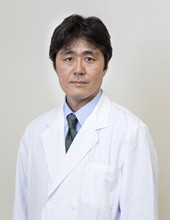
Physician-in-chief, Hepato-Biliary-Pancreatic and Gastrointestinal Surgery Director,
Digestive Diseases Center Senior Professor, IUHW School of Medicine, Gastroenterology Surgery
OSAMU Itano, M.D. Ph. D.
All eight members of our department are board-certified specialists in gastrointestinal surgery. We are experts in diseases of various organs and have gained experience at some of Japan’s leading high-volume facilities, particularly in cancer treatment. In collaboration with our hospital’s departments of Gastroenterology, Oncology, and Radiology, as well as other institutions nationwide, we utilize every available means—including robot-assisted surgery, extended surgeries involving vascular resection, chemotherapy, genomic medicine, radiofrequency ablation, stent therapy, catheter-based treatments, and transplant medicine—to provide optimal, world-class care. As long as our patients wish to continue treatment, we will never give up. Please feel free to consult us at any time, even if you have been told by another hospital that it is too late. We actively welcome requests for second opinions.
Overview of services
Our department focuses on surgical treatment for all digestive system diseases, ranging from benign to malignant conditions affecting the esophagus, stomach, intestines, liver, gallbladder, and pancreas, as well as conditions such as inguinal hernias and acute appendicitis.
We examine patients from every angle and provide consistent care from start to finish.
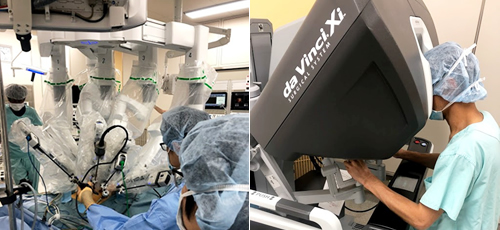
● Specialists in each organ system perform a wide range of procedures, from minimally invasive treatments using laparoscopy, thoracoscopy, and surgical robots, to extensive surgeries involving the resection of multiple organs.
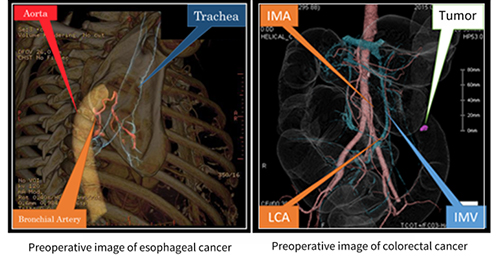
● We utilize the latest equipment, such as 3D CT scanners, to perform preoperative simulations and ensure safe and reliable surgeries.
● With a highly skilled rehabilitation team—a hallmark of International University of Health and Welfare—we provide rehabilitation interventions immediately after surgery or even before surgery, placing the highest priority on an early return to daily life. We work to prepare the living environment and provide care after discharge, ensuring patients can continue their treatment with peace of mind.
● We aim for "total care", not merely "curing diseases" but also "improving the patient's well-being”.
Hepatobiliary and pancreatic diseases
Hepatobiliary and pancreatic diseases encompass a vast array of conditions and are known for being difficult to diagnose. Even benign conditions such as gallstone disease can become life-threatening if the condition worsens, while malignant tumors are classified as “intractable cancers” with poor prognoses. Surgery in the hepatobiliary-pancreatic field is anatomically complex and requires extremely advanced technical skills. A consistent follow-up system provided by specialists, from the time of diagnosis until the completion of treatment, is essential for achieving favorable treatment outcomes.
"To fight disease to the very end"
As the main hospital of the International University of Health and Welfare School of Medicine, we are committed to providing world-class, cutting-edge treatment. Through our network with the International University of Health and Welfare Group and the Department of Surgery at Keio University, we utilize every available method—including extended surgery with vascular resection, radiofrequency ablation, stent therapy, catheter-based treatments, and liver transplantation—to fight hepatobiliary and pancreatic diseases.
"Minimally invasive whenever possible"
We perform laparoscopic surgery for hepatobiliary and pancreatic diseases. This procedure requires advanced technical skills and is available at only a limited number of facilities. Dr. Itano, our physician-in-chief, is a certified surgeon by the Japan Society of Endoscopic Surgery and a board member of the Endoscopic Liver Surgery Study Group. He is also an organizer of t the Endoscopic Liver Surgery Study Group and boasts one of the highest numbers of laparoscopic hepatobiliary and pancreatic surgery cases in Japan.
Upper gastrointestinal tract
To patients with esophageal or gastric cancer visiting our hospital:
Regardless of the stage of cancer, age, or the presence of comorbidities, we provide the best possible medical care tailored to each individual patient. This care may include surgery, endoscopic treatment, drug therapy, radiation therapy, and palliative care.
Our hospital is staffed with professionals from various departments, including gastrointestinal surgery, gastroenterology, oncology, radiology, and palliative care. We are certified as a provisional training facility for esophageal surgery specialists and a grade B certified facility by the Japanese Gastric Cancer Association.
Features of our team
1.Safe surgeries with minimal physical burden
2.Advanced initiatives for early postoperative recovery
3.Three experienced, full-time staff members who specialize in the esophagus and stomach.
1. Safe surgeries with minimal physical burden
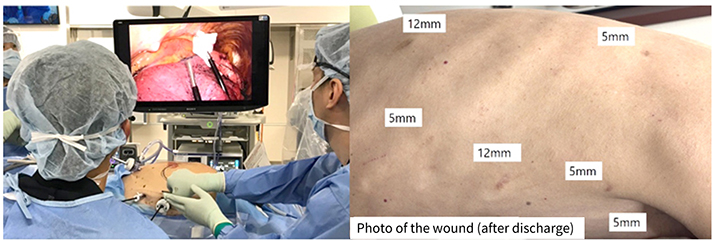
We actively perform minimally invasive surgery, including thoracoscopic and laparoscopic surgery(including robot-assisted surgery). We perform these procedures, even for advanced cancers, when we can ensure safety. Smaller incisions are not only cosmetically advantageous but also facilitate faster recovery.
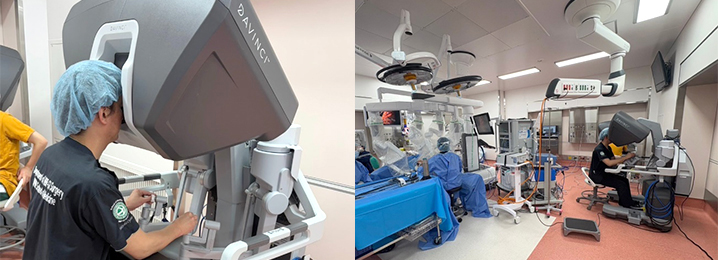
We employ surgical techniques with higher safety profiles.While domestic guidelines establish standard surgical methods for each disease to a certain extent, the choice of anastomosis techniques(methods for connecting parts of the digestive tract, such as the esophagus or stomach)is left to the discretion of the facility and the surgeon. Our team reviews objective indicators, such as our clinical experience and academic papers, to select the surgical procedure deemed safest for each individual case.
Example: Safe cervical esophagogastric anastomosis using the Collard modification for esophageal cancer
The Collard modification is characterized by a lower risk of postoperative anastomotic stricture because it allows for a wider anastomotic diameter compared to conventional methods(Hirano, Daiko, et al. Totally mechanical Collard technique for cervical esophagogastric anastomosis reduces stricture formation compared with circular stapled anastomosis. World J Surg 2020).
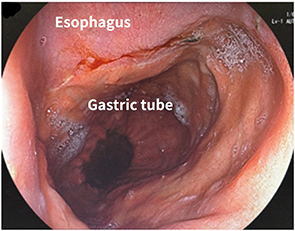
Example: Two-stage surgery for high-risk esophageal cancer cases
For high-risk patients, such as those aged 80 or older, a gastrostomy is created preoperatively. The surgery is performed in two stages: first, esophagectomy and creation of an esophageal stoma; second, gastric tube reconstruction.
2. Advanced initiatives for early postoperative recovery
Complications such as pneumonia and anastomotic leakage may occur following surgery for esophageal or gastric cancer. If complications arise, the hospital stay will be longer and recovery after discharge will also be affected. In collaboration with the University of Tokyo, Keio University, and the National Cancer Center Japan, our hospital utilizes a nationwide big data set known as the DPC database to research various perioperative management strategies(therapeutic support from pre- to post-surgery)aimed at minimizing the risk of postoperative complications.We have published these findings not only in domestic academic conferences and media but also in leading international journals(top-tier surgical journals in the U.S. and U.K.).
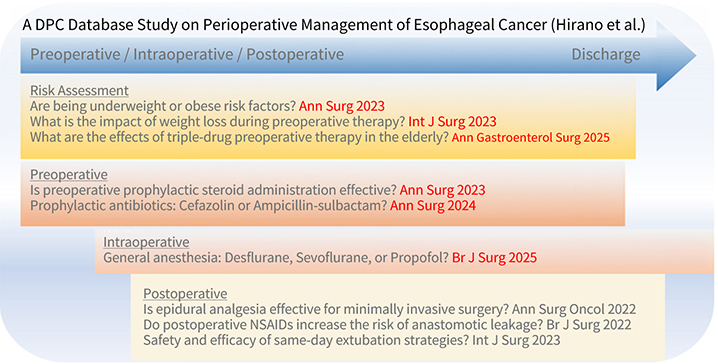
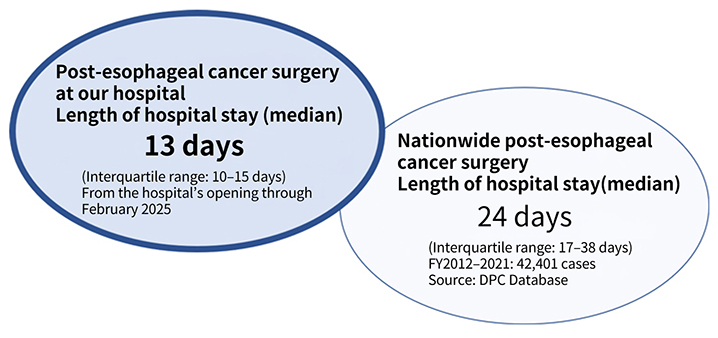
We quickly incorporate these findings into our daily clinical practice and achieve excellent results. For instance,esophageal cancer patients treated by our team are discharged 11 days earlier than the national average, placing us among the best in the country.
Our team believes that"adequately managing postoperative pain is the patient’s right."We have received positive feedback from patients for minimizing surgical incisions and for combining multiple analgesic methods immediately after surgery.We also believe that actively managing postoperative pain enables early rehabilitation and faster recovery.
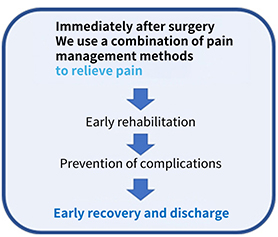
3.Three experienced, full-time staff members who specialize in the esophagus and stomach
Out team consists of three full-time staff members who specialize in the esophagus and stomach. We ensure the quality of our surgeries through a system in which at least two full-time staff members are present during cancer surgeries. All three are members of the Japanese Esophageal Society(two of whom are council members), the Japanese Gastric Cancer Association, and the Japanese Society of Endoscopic Surgery. They are also board-certified specialists of the Japanese Surgical Society and the Japanese Society of Gastroenterological Surgery(two of whom are certified instructors).
Our team treats the following major conditions:
- Esophageal cancer
- Gastric cancer
- Gastrointestinal stromal tumors(GIST)
- Benign esophageal diseases(esophageal achalasia, reflux esophagitis, hiatal hernia)
Lower gastrointestinal tract
We perform laparoscopic surgery for virtually all cases requiring surgical treatment, primarily focusing on colorectal cancer, as well as conditions such as ulcerative colitis and Crohn’s disease.
For rectal cancer, we strive to improve treatment outcomes and preserve the anus by combining preoperative chemoradiotherapy. We also actively incorporate robot-assisted surgery, which has been covered by national health insurance since April 2018. Our goal is to consistently provide the latest and best medical care.
Furthermore, we have established an outpatient clinic staffed by specialists for anal conditions, such as hemorrhoids. This ensures that we provide superior, safe medical care for all diseases of the lower gastrointestinal tract.
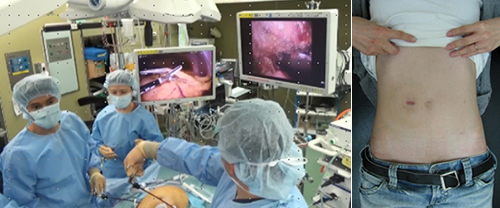
(surgical procedure and postoperative scars)
Weight loss and metabolic surgery team
If you visit our Department of Diabetes, Metabolism, and Endocrinology and are determined to be a candidate for surgical treatment for obesity or diabetes, you can undergo weight loss and metabolic surgery at our hospital.
Surgical performance
※You can scroll horizontally to view more.
| 2022 | 2023 | 2024 | ||||
|---|---|---|---|---|---|---|
| Surgical procedure | Total | Laparoscopic surgery (of which Robot) |
Total | Laparoscopic surgery (of which Robot) |
Total | Laparoscopic surgery (of which Robot) |
| Esophagectomy with reconstruction for esophageal cancer | 8 | 8 | 13 | 13 | 10 | 10 |
| Esophageal cancer | 5 | 12 | 7 | |||
| Esophagogastric junction cancer | 3 | 1 | 3 | |||
| Gastrectomy | 32 | 24 | 39 | 32 | 42 | 39(5) |
| Gastric cancer | 26 | 29 | 34 | |||
| Esophagogastric junction cancer | 1 | 1 | 1 | |||
| Colon resection | 76 | 61(13) | 86 | 70(40) | 96 | 77(41) |
| Colon cancer | 60 | 71 | 72 | |||
| Rectal resection/transection | 47 | 44(42) | 45 | 43(38) | 33 | 31(28) |
| Rectal cancer | 44 | 45 | 32 | |||
| Anal canal cancer | 1 | 0 | 1 | |||
| Hepatectomy(with bile duct resection) | 2 | 0 | 0 | 0 | 3 | 0 |
| Hepatectomy(without bile duct resection) | 39 | 35(10) | 39 | 33(14) | 39 | 34(14) |
| Hepatocellular carcinoma | 14 | 8 | 9 | |||
| Metastatic liver cancer | 17 | 23 | 25 | |||
| Biliary tract cancer | 8 | 7 | 1 | |||
| Pancreatectomy | 16 | 5(5) | 20 | 3(2) | 31 | 8(6) |
| Pancreatic cancer | 9 | 13 | 22 | |||
| Biliary tract cancer | 4 | 5 | 2 | |||
| Cholecystectomy | 94 | 88 | 104 | 101 | 103 | 100 |
| Acute cholecystitis | 15 | 25 | 23 | |||
| Appendectomy | 32 | 32 | 33 | 33 | 46 | 46 |
| Inguinal hernia repair | 90 | 70 | 112 | 84 | 125 | 89 |
| Hemorrhoids, anal fissure, and anal fistula | 65 | 0 | 95 | 0 | 108 | 0 |
| Other surgeries | 93 | 60 | 122 | 67 | 153 | 87 |
Request for cooperation with the Surgical Procedures Database Project and NCD
Our department is registered with the Surgical Procedures Treatment Information Database Project operated by the NCD(National Clinical Database, a general incorporated association).
The NCD is a system for registering surgical cases in conjunction with the specialist certification system, with the objectives of ensuring the appropriate allocation of surgeons, improving quality, defining the role of surgical specialists, and systematically tracking surgical procedures.
Our hospital registers clinical data from the following departments—Cardiology, Pulmonary Surgery, Gastroenterological Surgery, Renal and Urological Surgery, Obstetrics and Gynecology, Pediatric Surgery, Breast Surgery, Plastic and Reconstructive Surgery, Otorhinolaryngology and Head and Neck Surgery, and Anatomic Pathology—into the NCD(National Clinical Database)database project.
The NCD is a general incorporated association established through the collaboration of numerous clinical societies to assess the current state of healthcare in Japan. This initiative aims to improve the quality of medical care and provide patients with the best possible treatment by collecting, compiling, and analyzing data on surgeries, treatments, and autopsies from across Japan.
The scope of data collection includes diagnoses that led to tests and treatments performed during routine clinical practice, as well as various treatments such as surgeries and their methods. We kindly ask for your understanding of this initiative and your cooperation.