- HOME
- Departments & Centers
- Orthopedics
Orthopedics: Target Diseases, Their Representative Treatments, and Surgical Methods (Upper Limbs)
Upper limb (hand, elbow, shoulder) area: representative treatments and surgical methods
Upper limb trauma
While conservative treatment is the primary approach for trauma, due to our hospital's specialty, many patients are referred to us after being diagnosed elsewhere as requiring surgical intervention.
Trauma to the upper limb is the most common condition seen in our outpatient service. As the Japanese population ages, we are seeing an increase in distal radius and proximal humerus fractures. Additionally, sports-related finger and elbow injuries are frequently seen in younger individuals.
Although conservative treatment is the primary approach for trauma, many patients are referred to us, due to our hospital's specialty, by other hospitals after being diagnosed with the need for surgical intervention.
1. Distal radius fracture
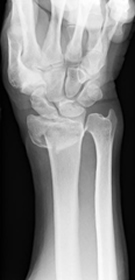
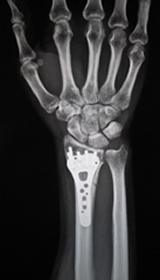
Surgery is performed in cases of severe comminution or when the fracture extends into the joint. Reduction and fixation using plates is performed; however, in cases of severe comminution, external fixation or artificial bone grafting is used in combination.
Furthermore, for fractures involving the articular surface, our hospital strives for precise articular surface reduction using arthroscopy. This helps prevent postoperative pain caused by joint deformity.
2. Finger trauma
Initial treatment is critically important for fractures of the small bones in the fingers. Determining whether surgery is necessary can sometimes be difficult. We recommend consulting a specialist to decide on the treatment plan. At our hospital, we select the best approach, including surgery if necessary, considering the severity of the injury, the patient's age, and their social circumstances. We use specialized instruments designed specifically for the fingers during surgery to ensure more precise reduction.
3. Elbow injuries
Elbow fractures and ligament injuries can sometimes be difficult to treat and may require specialist care. We select the most appropriate approach—anterior, posterior, or lateral—based on the condition, and utilize intraoperative ultrasound to ensure precise reduction.
4. Tendon injuries
We actively perform surgery not only for fresh injuries but also for chronic tendon injuries that have occurred over time. We aim for favorable functional recovery through close collaboration with rehabilitation services.
Peripheral nerve disorders
Conditions known as compressive neuropathies are recognized, where peripheral nerves are compressed by surrounding tissues, causing numbness and pain in the affected area. Carpal tunnel syndrome and cubital tunnel syndrome, which cause hand numbness, are prime examples. At our hospital, we utilize imaging tests such as X-rays, MRI, and ultrasound, along with nerve conduction velocity tests and electromyography, to make accurate diagnoses and aim for the most appropriate treatment. In cases where the initial consultation reveals severe nerve damage with visible hand muscle atrophy, we perform tendon transfer during surgery to further reduce impairment in activities of daily living.
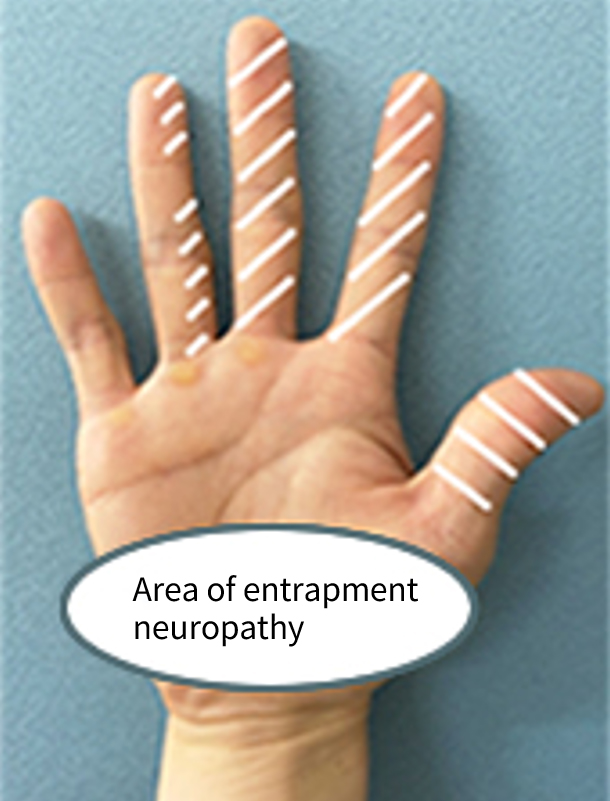
entrapment in carpal
tunnel syndrome
Lateral epicondylitis (tennis elbow)
This is inflammation at the attachment site of the short radial wrist extensor tendon, which originates from the lateral epicondyle of the humerus.
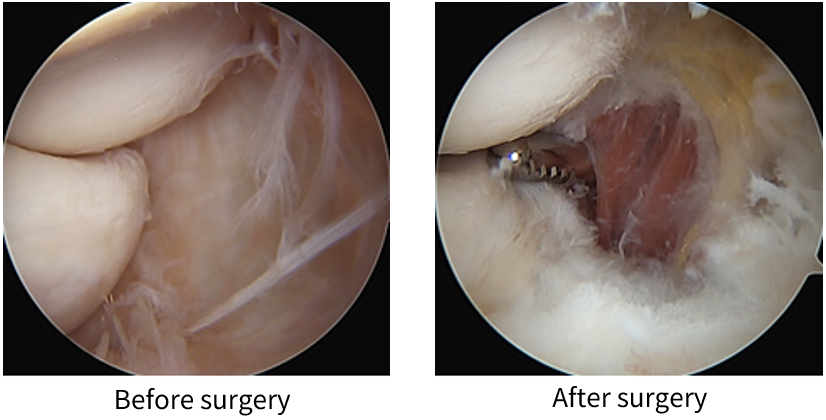
It is often called tennis elbow because it commonly occurs in tennis enthusiasts. Pain occurs on the outer side of the elbow joint when grasping objects or wringing out a towel. Surgery is performed when symptoms do not improve with conservative therapy using stretches, topical medications, or braces.
Our hospital actively performs arthroscopic surgery. If you have been suffering from pain on the outer side of your elbow for many years, we encourage you to consult with us.

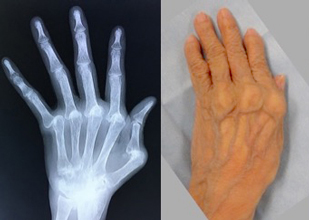
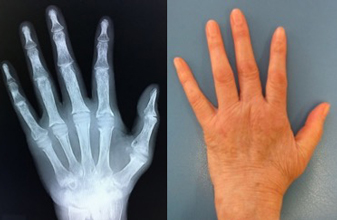
Rheumatoid arthritis
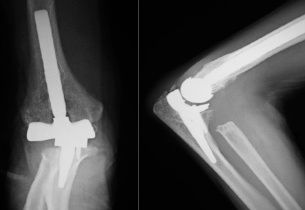
Treatment for hand and elbow deformities caused by rheumatoid arthritis is generally challenging, and facilities with expertise in this area are limited. Our hospital actively performs artificial joint replacement surgery for rheumatoid fingers and elbows, achieving favorable outcomes. For relatively young patients with preserved articular surfaces, we prioritize joint-preserving surgery whenever possible. Our physicians have extensive experience in artificial finger joint replacement, artificial elbow joint replacement, as well as soft tissue reconstruction of the fingers and elbow joint reconstruction without artificial joints. Multiple types of artificial joints are available, and we select the appropriate one based on the patient's condition. Regarding the shoulder, as mentioned in the section on osteoarthritis below, we have achieved favorable outcomes since introducing a specialized, recently developed reverse-type shoulder prosthesis.
Osteoarthritis
Unlike weight-bearing joints like the hip or knee, non-weight-bearing upper limb joints like the shoulder and elbow have a lower frequency of developing osteoarthritis. However, the incidence is gradually increasing with the aging population. Additionally, individuals engaged in sports or physically demanding labor may develop osteoarthritis even at a younger age.
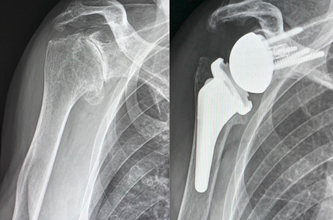
We actively perform arthroscopic surgery and joint replacement surgery for osteoarthritis. Elbow arthroscopy, in particular, offers high patient satisfaction relative to its minimal surgical invasiveness. We encourage anyone suffering from chronic elbow pain to consult with us. Regarding the shoulder, a recently developed specialized reverse-type shoulder prosthesis has been introduced. We have performed this procedure on patients with shoulder osteoarthritis with favorable outcomes.
Arthroscopic findings in osteoarthritis of the elbow (left: anterior view, middle: posterior view, right: a loose body within the elbow joint)
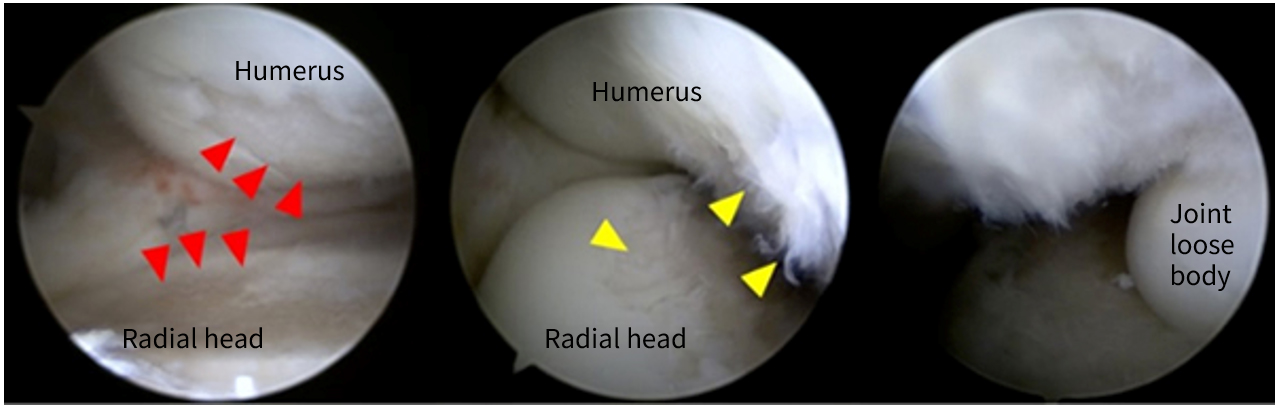
Yellow triangle area: Cartilage is fibrotic and frayed
Reverse-type artificial shoulder joint for shoulder osteoarthritis (left: pre-op, right: post-op)
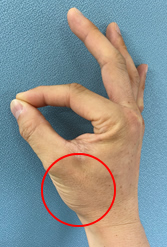
Thumb CMC joint
This is osteoarthritis affecting the CMC joint at the base of the thumb. It is thought to be caused by aging and overuse. Pain occurs at the base of the thumb during actions like pinching, gripping, or opening jar lids. If symptoms do not improve with conservative treatment using orthotics and anti-inflammatory pain medication, surgery is performed. At our hospital, we primarily perform arthroplasty. If you are experiencing thumb pain, please feel free to consult us.
Dupuytren's contracture
Dupuytren's contracture is a disease of unknown cause where a hard lump appears on the palm, gradually causing the fingers to bend and then lock in that position. Treatment is necessary if the contracture progresses. Improvement can be achieved through surgery. If you are experiencing this condition, please consult our department.
Rotator cuff tears
Shoulder pain is a common symptom encountered in outpatient settings. While most cases result from periarthritis of the shoulder (commonly known as frozen shoulder), some cases involve pain caused by damage to the rotator cuff tendons surrounding the shoulder joint (rotator cuff tear or injury). It can tear due to age-related changes, trauma, or wear and tear from occupations or sports involving repetitive shoulder use. If pain persists despite conservative treatment, arthroscopic rotator cuff repair surgery is performed.
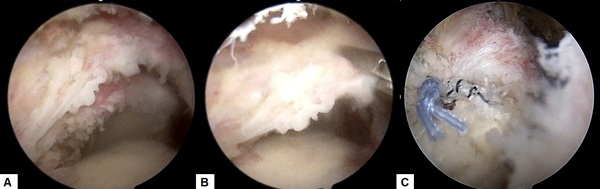
A: Rotator cuff tear site (The torn edge is visible above. The humerus is visible below (black circle))
B: The torn section is being retracted with forceps (upper right)
C: The torn section was sutured to the humerus using special suture material (a knot made with blue and black-and-white striped suture is visible on the left)