- HOME
- Departments & Centers
- Diabetes, Metabolism and Endocrinology
- Weight Loss and Metabolic Improvement Surgery for Obesity and Diabetes
Diabetes, Metabolism and Endocrinology
Weight Loss and Metabolic Improvement Surgery for Obesity and Diabetes
If you visit our Department of Diabetes, Metabolism, and Endocrinology and it is determined that you are a good candidate for surgery to treat your obesity or diabetes, you can undergo weight loss and metabolic improvement surgery at our hospital.
※We have a partnership with Toho University Medical Center, Sakura Hospital.
Treatment objectives
- Reduction of excess body weight
- Improvement of obesity-related conditions(reduction or discontinuation of medication, risk reduction, etc.): Diabetes, hypertension, dyslipidemia, hyperuricemia/gout, coronary artery disease(myocardial infarction/angina), stroke, fatty liver disease, menstrual disorders/infertility, sleep apnea syndrome/obesity hypoventilation syndrome, musculoskeletal disorders, obesity-related kidney disease
- Improvement of lifestyle habits and stabilization of social life, etc.
Need for treatment
The incidence of cardiovascular diseases, cerebrovascular diseases, and malignant tumors is significantly higher in individuals with obesity-related conditions compared to individuals of normal weight. Surgery can be expected to reduce excess weight and improve obesity-related conditions.
Specific surgical methods
(1)Laparoscopic sleeve gastrectomy
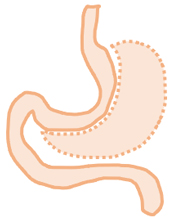
- The stomach is narrowed into a banana-like shape(the remaining stomach capacity is approximately 100 ml).
- By limiting food intake, weight loss and improvement in diabetes are expected.
- Levels of ghrelin, an appetite-stimulating hormone secreted by the stomach, decrease.
- This is the most commonly performed procedure, both domestically and internationally.
- As of September 2021, it is the only weight loss and metabolic improvement surgery covered by the national health insurance in Japan.
- In patients with a BMI of 50 or higher or a long history of diabetes, the effects on weight loss and diabetes improvement may be inferior to those of the bypass procedures described below.
- For patients with hiatal hernias or reflux esophagitis, symptoms may worsen after surgery.
(2)Laparoscopic sleeve-bypass surgery(sleeve gastrectomy and duodenal-jejunal bypass)
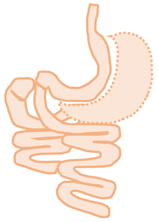
- Weight loss is expected through reduced food intake and restricted absorption.
- The stomach can be examined with a standard endoscope even after surgery. This compensates for the drawbacks of gastric bypass surgery.
- As of September 2021, this surgery is only available at select hospitals as advanced medical care or self-pay treatment.
- This is the most technically challenging of the three procedures.
- Depending on the patient’s overall health, the surgery may be performed in two stages.
- Supplement intake is recommended after surgery.
(3)Laparoscopic gastric bypass surgery
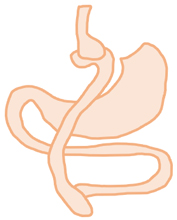
- Weight loss is expected through reduced food intake and restricted absorption.
- It has the longest history of the three procedures and long-term outcomes are available.
- As of September 2021, this surgery is only available at select hospitals as a self-pay service.
- Post-surgery, it becomes difficult to examine the stomach using an endoscope. It is not recommended for patients with a history of Helicobacter pylori infection.
- Supplement intake is recommended after surgery.
(4)Revision surgery
Although "weight loss and metabolic improvement surgery" is highly effective, some patients do not achieve sufficient weight loss or improvement in diabetes with a single procedure. Some patients experience weight regain, particularly with sleeve gastrectomy. In such cases, adding a bypass procedure may lead to weight loss and improved diabetes control. This is called "revision surgery" and, while it is widely performed overseas, it is currently available only at a limited number of facilities in Japan.
(5)Laparoscopic surgery
In "weight loss and metabolic improvement surgery," laparoscopic surgery results in smaller incisions than open surgery and has a lower incidence of the complications described below. Therefore, it is superior in terms of safety. Therefore, we generally perform laparoscopic surgery in all cases. However, depending on the conditions during the procedure(such as severe adhesions), there is a possibility—though not guaranteed—that the procedure may need to be converted to open surgery.
Postoperative care
(1)Postoperative procedures and tests
After surgery, you will be transferred to the intensive care unit(ICU). You will return to the general ward the day after surgery. Your overall condition will be closely monitored, and blood tests, X-rays, CT scans, and other tests will be performed as necessary.
(2)Rehabilitation
To prevent complications such as atelectasis or pneumonia(discussed later), rehabilitation will begin on the day of surgery or the day after.
(3)Postoperative diet
- (Recovery and transition phase): If your condition is stable, you will begin taking in food orally the day after surgery. As a general rule, a liquid diet will be maintained for the first month after surgery.
- (Weight cutting phase): Starting four weeks after surgery, you will gradually begin eating solid foods. By four weeks post-surgery, you should be able to consume approximately 600–800 kcal/day. By one year, you should be able to consume approximately 1,300–1,500 kcal/day.
- Generally, patients start with 30-minute meals, five to six times a day. For bypass surgeries, it is also important to be aware of dumping syndrome, which is caused by consuming a high amount of carbohydrates. Over the course of several months, patients will gradually return to normal eating patterns.
- Since some patients experience weight regain one year or more after surgery, we recommend the long-term use of a specialized formula diet.
- For bypass procedures, regular monitoring is required for vitamins B1 and B12, as well as fat-soluble vitamins (A, D, and K), iron, and calcium. Malabsorption of these nutrients is anticipated, so patients are advised to take a combination of supplements.
(4)After discharge
Please pay close attention to your diet and abdominal symptoms, such as pain and bloating.
(5)Postoperative outpatient visits
Continuous dietary and nutritional management is necessary even after surgery. Patients who are unable to attend regular outpatient visits are highly likely to experience weight regain.
Additionally, physical and mental imbalances may occur after surgery, making regular outpatient visits essential.
Risk of death following treatment
According to a report from the Japanese Society for Endoscopic Obesity and Diabetes Surgery, the mortality rate for "obesity and metabolic(diabetes)surgery" performed in Japan is 0.1%(one in 1,000).
Anticipated complications and necessary medical interventions
If you undergo surgery, the following complications may occur:
1)Anastomotic leak(1.3%)
An anastomotic leak is a condition in which the contents of the digestive tract leak out because the sutured or anastomosed section of the digestive tract does not heal properly. Compared to other gastrointestinal surgeries, bariatric and metabolic surgery is characterized by the fact that "once it occurs, it tends to become refractory," and "it is not uncommon for it to occur more than two weeks after surgery." Reoperation may be required.
2)Postoperative bleeding(4.3%)
Bleeding may occur in the abdominal cavity, incision site, or anastomosis site after surgery. This may require a blood transfusion or reoperation.
3)Stricture(3.3%)
Postoperatively, the gastric tube or anastomosis may narrow, potentially requiring endoscopic treatment or reoperation.
4)Refractory gastroesophageal reflux disease(GERD)(less than 1%)
If symptoms cannot be controlled with oral medication, endoscopic treatment or reoperation may be necessary.
5)Surgical site infection(less than 1%)
If redness or pain develops at the surgical site later on, an infection may be present. In such cases, the wound may be opened to drain pus, and the area may be irrigated.
6)Pneumonia/Atelectasis(less than 1%)
These conditions are more likely to occur if the patient is unable to get out of bed or take deep breaths due to pain at the surgical site. Patients with poor respiratory function prior to surgery are at a higher risk. Starting rehabilitation early after surgery can help reduce this risk.
7) Intestinal obstruction and intra-abdominal hernia(less than 1%)
Intestinal obstruction occurs when food or digestive fluids cannot pass toward the anus after surgery. This results in an absence of bowel movements or flatulence and causes vomiting. There are two types: one where the intestine becomes mechanically blocked due to abnormal kinking or twisting caused by adhesions resulting from the surgery and another where intestinal motility becomes impaired. In both cases, the patient is placed on a fasting regimen while waiting for recovery, though reoperation may be necessary in some instances. Postoperative internal hernias, in which the intestine becomes trapped in the spaces between organs or tissues, may also occur and require reoperation.
8)Injury to other organs(less than 1%)
During surgery, organs such as the spleen or intestines may be injured, which may require additional or repeat surgery.
9)Arrhythmia(less than 1%)
Arrhythmias may occur during the postoperative recovery period. Most arrhythmias are temporary and gradually resolve with careful monitoring and appropriate management.
10)Pulmonary artery thrombosis(less than 1%)
Pulmonary artery thrombosis occurs when a blood clot formed during surgery blocks a blood vessel in the lungs. This condition is also known as "economy class syndrome," which occurs after long flights. Normally, blood flow in the veins is maintained by muscle contractions and valves within the blood vessels that prevent backflow. However, during surgery, the muscles in the lower limbs remain completely still. This causes blood to pool, making it more likely to clot within the veins. Most cases of pulmonary embolism present as sudden shortness of breath when the patient first stands up and walks after surgery.
As a preventive measure, it is important to get out of bed as soon as possible after surgery. However, even when patients cannot move voluntarily during or immediately after surgery, mechanical leg massage is performed to improve blood circulation. Additionally, medications that prevent blood clotting, such as heparin, may be administered via injection after surgery.
※There is a non-zero risk of life-threatening complications or severe long-term consequences resulting from these complications. If complications arise, we will provide the best possible care.
Other possible treatment options and their risks
Medical treatment will continue. If sufficient weight loss cannot be achieved through medical treatment, the incidence of cardiovascular disease, cerebrovascular disease, and malignant tumors associated with obesity-related conditions increases significantly compared to individuals of normal weight.
References:
- Metabolic Surgery: Clinical Update, Medical Publishing
- Modern Physician Special Feature: The Forefront of Obesity Treatment, Shinkoh-Igaku Publishing
- Progress in Medicine - Obesity: Latest Information on Surgical Treatment and Basic Research
- Toho University Medical Center, Sakura Hospital: Advanced Obesity Treatment/Bariatric Surgery Website
Special outpatient services
Gastroenterological surgery for “weight loss and metabolic improvement”(Tuesday mornings and Friday afternoons)
Specialists: Dr. HIRANO Yuki and Dr. ITANO Osamu. If you visit our Department of Diabetes, Metabolism, and Endocrinology and it is determined that you are a candidate for surgical treatment of obesity or diabetes, you can undergo weight loss and metabolic improvement surgery at our hospital.
※We have a partnership with Toho University Medical Center, Sakura Hospital.
Results of weight loss and metabolic improvement surgeries
We performed our first surgery in January 2022. As of August 2023, we have performed four surgeries (two men and two women with an average age of 56). All surgeries were completed successfully without complications. Postoperatively,an average weight loss of 30.5 kgwas achieved (Figure 1). This result is comparable to the average weight loss of 27 kg reported in 2,885 cases nationwide (for patients under 65 years of age) who underwent weight loss and metabolic improvement surgery (Reference 1). Furthermore, three of the four patients had diabetes and were taking medication (including insulin therapy for one patient) before surgery. However, all patients achieved HbA1c levels below 6.5% after surgery without medication. This meets the criteria for "remission," which is considered to mean that "diabetes has been cured" (Reference 2).
Bariatric and metabolic surgery is a multidisciplinary treatment involving the departments of gastroenterological surgery, diabetes, metabolism, and endocrinology; anesthesiology; psychiatry; rehabilitation; nutrition; and pharmacy.
Our staff will continue to strive to ensure that patients requiring bariatric and metabolic surgery can undergo the procedure safely.
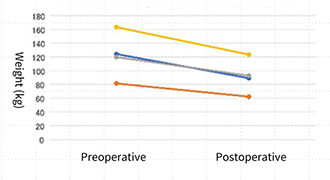
bariatric and metabolic surgery(Reference 1)
Reference 1: Takemoto, M., et al. Annals of Gastroenterology and Surgery, 2023.
Reference 2: Riddle, M. C., et al. Diabetes Care, 2021. 2021;44:2438–2444.