- HOME
- Departments & Centers
- Cardiac Surgery
- Congenital heart disease
Cardiac Surgery
Adult congenital heart disease(ACHD)
What is congenital heart disease?
Children born with heart conditions require treatment, such as surgery, during the neonatal or infant stages immediately after birth, or during their school years. While heart diseases that develop in adults—such as heart valve disease associated with atherosclerosis or myocardial infarction—are referred to as acquired heart disease, the conditions affecting these children are called congenital heart disease.
What is adult congenital heart disease (ACHD)?
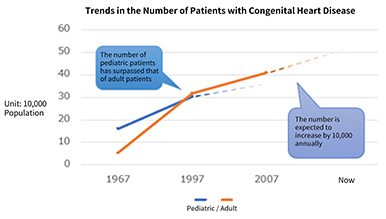
in the number of patients with congenital heart disease
and the number of patients
who have reached adulthood
Thanks to improvements in the treatment of heart disease, not only adult heart disease patients but also many children with congenital heart disease are now being saved. In particular, before the 1950s and 1960s when cardiac surgery began, the probability of children with congenital heart disease reaching adulthood was less than 50%. However, it is now reported that over 90% of children with congenital heart disease survive past infancy to reach adulthood. Furthermore, it is reported that the number of ACHD patients with congenital heart disease in Japan totals 500,000. This number is expected to continue to rise.
The complexity of treatment
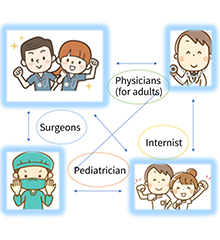
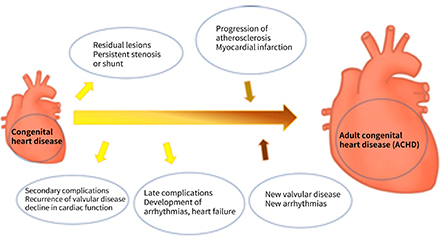
Because congenital and acquired heart diseases differ significantly in their characteristics, medical staff from different departments (pediatric cardiology and cardiology, pediatric cardiac surgery and cardiac surgery) have traditionally been responsible for their treatment. However, congenital heart disease in adults can result from residual lesions or late complications from childhood heart treatments, or it can involve the development of new conditions such as valvular disease or myocardial infarction. Consequently, a treatment approach focused solely on one specialty is often insufficient. Furthermore, the risks of surgery increase with each subsequent procedure, making actual treatment extremely challenging and leading to higher rates of complications and mortality. Furthermore, as children grow larger, the medical devices available for their treatment also change.
Changes in children
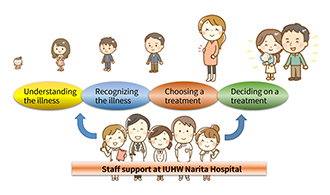
Children themselves are in the process of growing and becoming independent, and they become adults after experiencing many life events such as marriage, childbirth, and employment. They must begin making their own decisions regarding treatment options, which were previously determined by their parents. Moreover, since some children may not even realize they have a heart condition, they must first begin by understanding their own illness and then learn about lifestyle precautions and potential future developments.
Our strength and what we can offer
International University of Health and Welfare Narita Hospital is a university hospital where the Departments of Pediatric Cardiology, Cardiology, and Cardiac Surgery are all capable of providing advanced medical care. As children grow, we provide a comprehensive treatment environment that goes beyond simply treating the disease to include support for independence and social welfare. We consider it our mission to make this a reality. In particular, we believe there are still many patients in the community—especially those who were diagnosed with heart disease as children, have interrupted their treatment, or are struggling because there are no medical facilities capable of treating them or no hospitals they can visit. Please do not hesitate to consult with us.
Please consult us if any of the following apply to you:
- You were told you had a heart condition as a child.
- You had Kawasaki disease as a child.
- You were told you have a hole in your heart.
- You were diagnosed with Tetralogy of Fallot.
- You were told you have an arrhythmia during a health checkup.
- You were told you have a heart murmur.
- You used to visit a children’s hospital for a heart condition but no longer do so.
- You have moved and do not have a regular doctor.
- You are young but are concerned about chest symptoms.